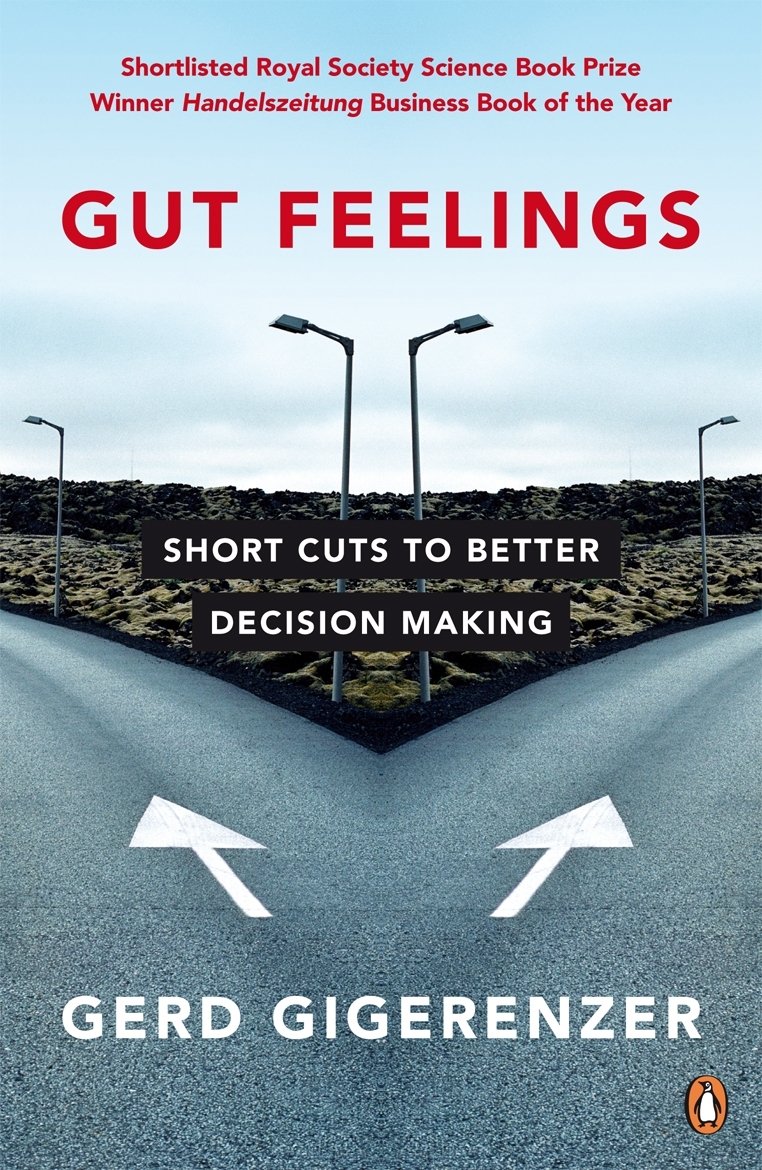
People often confuse intuition with a sixth sense or the arbitrary judgments of inept decision-makers, while thinking of intelligence as a deliberate, conscious activity guided by the laws of logic. Yet much of our mental life is unconscious and based on gut feelings (intuitions), processes that are alien to logic and beyond words. How does intuition work? When can we rely on it, when not?
One thing we know for sure: Without intuition, there would be little innovation. Chess masters, Nobel laureates, and physicians rely on their gut feelings, and switching back and forth between intuition and analysis is the secret of their success. But few professionals would publicly admit to making gut decisions and often search for reasons after the fact.
Intuition is more than impulse and caprice; it has its own rationale. This can be described by fast and frugal heuristics, which exploit evolved abilities in our brain. Heuristics ignore information and try to focus on the few important reasons. We need to take heuristics as seriously as logic if we wish to make the most of human cognition.
Gut Feelings: The Intelligence of Intuition
Reading List