Presentations
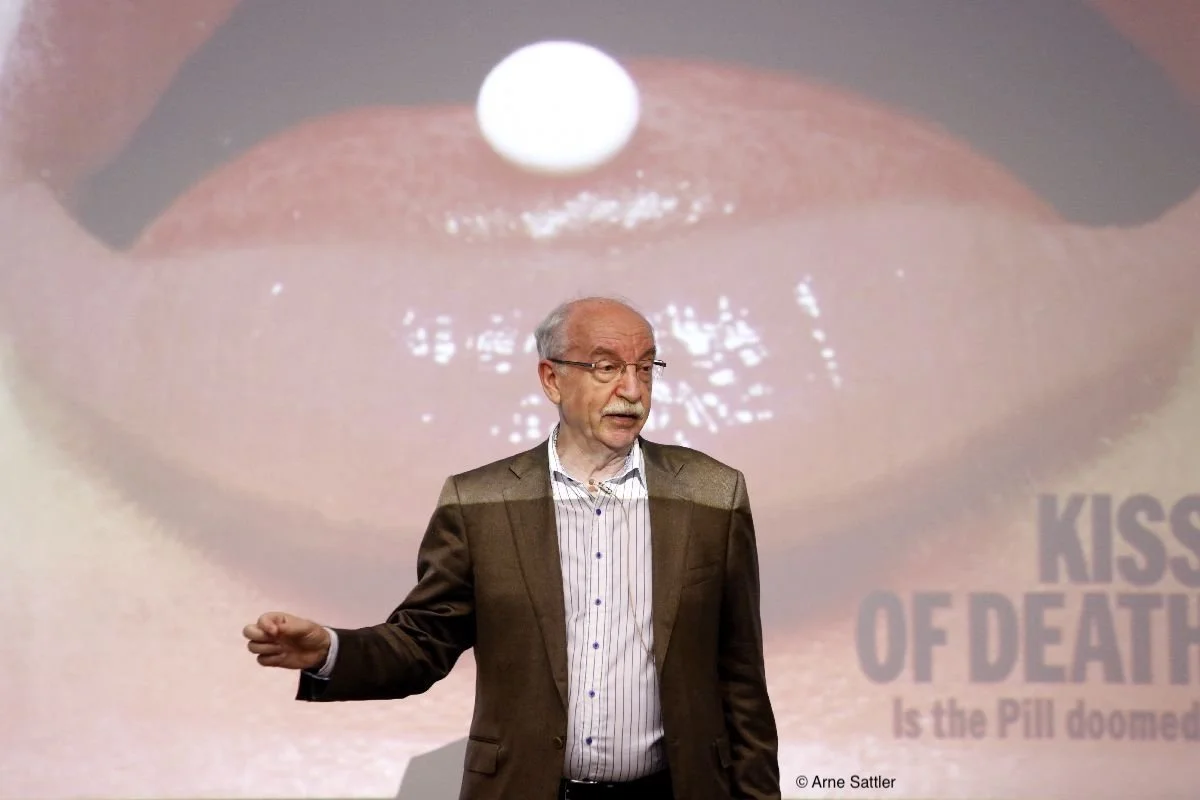
Gerd Gigerenzer at the “Lange Nacht der Wissenschaften” 2022 © Arne Sattler
-
Gigerenzer, G. (January 2025): How to Extend Behavioral Economics to Deal With Uncertainty? Workshop on Questions from Riccardo Viale’s Work. New York (USA).
Gigerenzer, G. (February 2025): Homo Heuristicus: Decision Making under Uncertainty. Precision Convergence Seminar McGill University Montreal (online).
Gigerenzer, G. (February, 2025): Smart Management: How Simple Heuristics Help Leaders Make Good Decisions in an Uncertain World. Academy of Behavioral Economics by FehrAdvice & Partners AG Austria (online).
Gigerenzer, G. (March, 2025): Ecological Rationality. Ergodicity Economics Conference 2025 Cascais, Portugal (online).
Gigerenzer, G. (March, 2025): Helping doctors and patients make sense of health statistics. DAGStat (Tagung der Deutschen Arbeitsgemeinschaft Statistik), Humboldt University Berlin. Berlin (Germany).
Gigerenzer, G. (March, 2025): Decision Making in an Uncertain World. The Equities Forum by the Centre for Institutional Investors (online).
Gigerenzer, G. (April, 2025): Die Kunst des Entscheidens in unsicheren Zeiten. [The art of decision-making in uncertain times]Potsdamer DIalog 2025 hosted by Unfallversicherung Bund und Bahn. Potsdam (Germany).
Gigerenzer, G. (April, 2025): Homo Heuristicus: Decision Making under Deep Uncertainty. Symposium Deep Uncertainty. Max Planck Institute for Research on Collective Goods. Bonn (Germany).
Gigerenzer, G. (May, 2025): How to Make “Good” Decisions Under Risk. Young European Symposium (YES). Berlin (Germany).
Gigerenzer, G. (May, 2025): Umgang mit Risiken in unsicheren Zeiten. [Dealing with risks in uncertain times].Lecture Series “Wissen über Nichtwissen” [Knowledge About Non-Knowledge]. University of Regensburg, Germany (online).
Gigerenzer, G. (May, 2025): Kommunikation von Risiken in einer ungewissen Welt. [Risk-communication in an uncertain world]. Rhetorik und Wissen. University of Tübingen (Germany).
Gigerenzer, G. (May, 2025): The rationality wars: A personal reflection. Scuola Superiore Sant’Anna. Pisa (Italy).
Gigerenzer, G. (May, 2025): The rationality wars: A personal reflection. ABC Workshop “Heuristics in Government”. Rome (Italy).
Gigerenzer, G. (May, 2025): Zwischen Wahrscheinlichkeit und Gewissheit - Menschliches Entscheiden in einer unsicheren Welt. [Between Probability and Certainty - Human Decision-Making in an Uncertain World.] Anton Zeilinger’s 80th Birthday. Vienna (Austria).
Gigerenzer, G. (May, 2025): The Art of Risk Communication. International Academy of Endodontics. Manchester (UK).
Gigerenzer, G. (June, 2025): Homo Heuristicus: Decision Making in an Uncertain World. SABE Conference. Trento (Italy).
Gigerenzer, G. (June, 2025): Die Angst vor der Verantwortung: Selbstständiges Denken statt Nudging und Consulting. [The fear of responsibility: independent thinking instead of nudging and consulting.] Oldenburger Schlüsselgespräche (online).
Gigerenzer, G. (June, 2025): Brauchen wir noch Bildung im digitalen Zeitalter? [Do we still need education in a digital world?]. Max Planck Gymnasium Ludwigshafen. Ludwigshafen (Germany).
Gigerenzer, G. (July, 2025): Die Zukunft der KI. [The Future of AI]. University of Gießen (Germany).
Gigerenzer, G. (July, 2025): Symposium. Bounded Rationality and Decision Making in Organizations: The Way Forward. AOM Kopenhagen (Denmark).
Gigerenzer, G. (July, 2025): Risk Savvy: How to Make Good Decisions. Private Credit Forum of the Centre for Institutional Investors. Online.
Gigerenzer, G. (July, 2025): Decision making in an uncertain world. University of Woxsen (India). Online
Gigerenzer, G. (September, 2025): The Herbert Simon Lecture in Behavioural Public Policy. Fourth International Behavioural Public Policy Conference. London (UK).
Gigerenzer, G. (September, 2025): How to Stay Smart in a Smart World. Max Planck Institute for Infection Biology. Potsdam (Germany).
Gigerenzer, G. (September, 2025): Risk Savvy: How to Make Good Decisions. Private Credit Forum of the Centre for Institutional Investors. Online.
Gigerenzer, G. (September, 2025): Ecological Rationality and Evolutionary Psychology. Annual Conference of the Cognition & Behavior Evolution Network 2025. Antwerpen (The Netherlands).
Gigerenzer, G. (October, 2026): Was Wissenschaft stark macht [What Makes Science Resilient]. Online Discussion.
Gigerenzer, G. (November, 2025): Gesundheitsstatistik [Health statistics]. University of Luzern (Switzerland). Online.
Gigerenzer, G. (November, 2025): Ärztliche Risikoanalyse und -kompetenz in der Onkologie [Medical risk analysis and competence in the field of oncology]. MEDEAconnect 25. Online.
Gigerenzer, G. (November, 2025): New work on Ecological Rationality. University of Sorbonne (France).
Gigerenzer, G. (November, 2025): Homo Heuristicus: Decision Making in an Uncertain World. Joan Muysken Lecture. Maastricht University (The Netherlands).
Gigerenzer, G. (December, 2025): Bounded Rationality. Workshop in honour of Massimo Egidi. LUISS Rome (Italy).
Gigerenzer, G. (December, 2025): Risikokompetenz in der digitalen Welt - Wie anonym sind Online- Gamer? [Risk Literacy in the Digital World – How anonymous are online gamer?]. FAGS (Fachverband Glücksspielsucht e.V.). Berlin (Germany).
-
Gigerenzer, G. (January 2024): Good science and AI. International Conference on Academic Publishing (APE Conference) 2024. Berlin.
Gigerenzer, G. (February 2024): Rationality for mortals. Santa Fe Institute, New Mexico, USA.
Gigerenzer, G. (March 2024): Cyber crime trends. sosafe. Cologne, Germany. Online
Gigerenzer, G. (March 2024): Chronische Erkrankungen und Gesundheitskompetenz [Chronic diseases and health literacy], Robert Bosch Stiftung. Berlin.
Gigerenzer, G. (April 2024): Rationality for mortals. Department of Psychology, Princeton University, USA.
Gigerenzer, G. (April 2024): Helping doctors and patients make sense of health statistics. University of Lucerne, Faculty of Health Science and Medicine. Lucerne, Switzerland.
Gigerenzer, G. (May 2024): Klick! Umgang mit der Ungewissheit [Click! Dealing with uncertainty]. Toleranzgespräche in Fresach. Fresach, Germany.
Gigerenzer, G. (May 2024): How to stay smart in a smart world. EHS Kongress. Berlin.
Gigerenzer, G. (June 2024): Alles auf einen Klick? [Everything at a click?]. Finance Festival. Frankfurt am Main, Germany.
Gigerenzer, G. (June 2024): Klick - wie wir in einer digitalen Welt die Kontrolle behalten [How to stay smart in a smart world]. 25. Forum Global, Rödl & Partner. Nuremberg, Germany.
Gigerenzer, G. (July, 2024): Die Kunst des Entscheidens in unsicheren Zeiten. [The Art of Decision-making in Uncertain Times]. Silipion IT Solutions. Hamburg (Germany).
Gigerenzer, G. (July, 2024): The European Research Council: An introduction. University of Southampton (UK).
Gigerenzer, G. (September, 2024): Decision making according to the stable-world principle: update. Online Webinar: Mind the gaps: Are we ready for mixed traffic with robotaxis? IEEE SA (online).
Gigerenzer, G. (September, 2024): How to stay smart in a smart world. Target Global. Berlin (Germany).
Gigerenzer, G. (September, 2024): Simple heuristics to run an interdisciplinary research group. Max Planck Society LeadNet Symposium, Berlin (Germany).
Gigerenzer, G. (September, 2024): Understanding risk language. Opening lecture, Royal Air Force Leadership Conference. Cranwell (UK).
Gigerenzer, G. (September, 2024): Kann weniger mehr sein? Über komplexe Algorithmen und einfache Heuristiken. [Can Less Be More? About Complex Algorithms and Simple Heuristics.] Keynote, Annual meeting of the German Association for International Property Law (GRUR). Augsburg (Germany).
Gigerenzer, G. (October, 2024): Zuversicht und Zweifel: Bildung im digitalen Zeitalter. [Confidence and Doubt: Education in the Digital Age.]Public lecture, 53. Lübecker Psychotherapietage. Lübeck (Germany).
Gigerenzer, G. (November, 2024): Peter Sedlmeier: Über Bernoulli, Bayes, Power, Yoga, etc. [Peter Sedlmeier: About Bernoulli, Bayes, Power, Yoga etc.] University of Chemnitz (Germany).
Gigerenzer, G. (November, 2024): Sind wir risikokompetent? [Are We Risk Literate?]German Federal Institute for Risk Assessment (BfR) (online).
Gigerenzer, G. (November, 2024): Homo heuristicus: Decision making under uncertainty. European Decision Sciences Seminar, INSEAD (online).
Gigerenzer, G. (November, 2024): Retire statistical significance: a world beyond p<0.05. Panel discussion. Department of Clinical Epidemiology, Aarhus University (online).
Gigerenzer, G. (November, 2024): Risikokompetenz. [Risk Literacy.] Podium discussion, Free Democratic Party Convention. Berlin (Germany).
Gigerenzer, G. (November, 2024): Der Umgang mit Ungewissheit im digitalen Zeitalter. [Dealing with Uncertainty in the Digital Age.]Landespräventionstag. Leipzig (Germany).
Gigerenzer, G. (December, 2024): The European Research Council: Perspectives on research funding. Aix-Marseille University, Marseille and Aix-en-Provence (France).
-
Gigerenzer, G. (January 2023): Intuition und Evidenz [Intuition and Evidence]. Ärztliche Mittwoch-Fortbildung, Entscheidend ist das Bauchgefühl. ONLINE.
Gigerenzer, G. (February 2023): Risikokompetenz: Bildung im digitalen Zeitalter [Risk Literacy: Education in the digital age]. 10. GEBF-Tagung, Essen.
Gigerenzer, G. (February 2023): From Bounded Rationality to Ecological Rationality. Data Institute (diiP), University of Paris. ONLINE.
Gigerenzer, G. (March 2023): Der Umgang mit Ungewissheit im digitalen Zeitalter. [Dealing with uncertainty in the digital age] Bielefeld Lectures. University of Bielefeld, Bielefeld.
Gigerenzer, G. (April 2023): Rationality for Mortals. Adair Lecture colloquium, Department of Psychology, University of Manitoba, Winnipeg.
Gigerenzer, G. (April 2023): Rationality for Mortals. Lecture series ‘Program for Cognitive Science’, Psychology Department, Princeton University.
Gigerenzer, G. (June 2023): What is bounded rationality? Summer Institute “Bounded Rationality”, Max-Planck Institute for Human Development, Berlin.
Gigerenzer, G. (September 2023): Statistical Illiteracy and medical magical thinking. Lecture at Harvard University. Boston, Massachusetts, USA. Online.
Gigerenzer, G. (September 2023): Wie wir in einer digitalen Welt die Kontrolle behalten und richtige Entscheidungen treffen! [How to stay in control and make the right decisions in a digital world!]. DICO Forum Compliance 2023. Berlin.
Gigerenzer, G. (September 2023): Chat GPT - Segen oder Fluch? [Chat GPT - Blessing or curse?]. Highlights der Physik. Kiel, Germany.
Gigerenzer, G. (September 2023): Wie behalten wir in einer digitalen Welt die Kontrolle? [How to stay smart in a smart world]. Annual meeting of the Center for Mind, Brain and Behaviour (CMBB). Gießen, Germany.
Gigerenzer, G. (November 2023): Risikokompetenz: Bildung im digitalen Zeitalter [Risk literacy: Education in the digital age]. Bundesringtagung der Abendgymnasien Deutschlands. Potsdam, Germany.
Gigerenzer, G. (November 2023): Decision making under risk versus decision making under uncertainty. Uppsala University, Sweden. Online.
Gigerenzer, G. (November 2023): How to stay smart in a smart world. Hungarian Academy of Science, Hungary. Online.
Gigerenzer, G. (November 2023): Risikokompetenz in einer digitalen Welt [Risk literacy in a digital world]. DSGV Risikofachtagung. Berlin.
Gigerenzer, G. (November 2023): Dealing with uncertainty in the digital age. 16. EACVA Jahreskonferenz für Bewertungs Professionals. Berlin.
Gigerenzer, G. (November 2023): Risikokultur - Kompetenzen für die Welt von morgen [Risk culture - skills for the world of tomorrow]. Bozen, Italy.
-
Gigerenzer, G. (January 2022) How to stay smart in a smart world. Penguin, London. Online.
Gigerenzer, G. (January 2022) Dealing with risk in uncertain times. Carl Friedrich von Weizsäcker Center for Science and Peace Research at the University of Hamburg. Online.
Gigerenzer, G. (February 2022): Embodied heuristics. Graduate School of Education, University of California, Berkeley. Online.
Gigerenzer, G. (March 2022) Risk management in the pandemic. Error management seminar for Eli Lilly. Berlin.
Gigerenzer, G. (April 2022): How to stay smart in a smart world. The Royal Institution, London. Online.
Gigerenzer, G. (April 2022) Communication of risks in the media. LGT Media Prize. Vienna.
Gigerenzer, G. and the Harding Center Team (April 2022) Analyse der Risikokommunikation am Beispiel der aktuellen Coronapandemie [Analysis of risk communication using the current Covid-19 pandemic as an example]. Saxon State Ministry of the Interior. Dresden.
Gigerenzer, G. (May 2022): Simple heuristics to run a research group. University of Southampton. Online.
Gigerenzer, G. (May 2022) Homo heuristicus: Decision making under radical uncertainty. Edinburgh Business School.
Gigerenzer, G. (June 2022) Risiko - wie man Entscheidungen richtig trifft [Risk - How to make the right decisions]. 27th Rheintaler Wirtschaftsforum: Risiko, Verantwortung, Führung - wie wir in und nach der Krise zukunftsfähig bleiben. Winterthur, Switzerland.
Gigerenzer, G. (June 2022) Bauchentscheidungen - die Intelligenz des Unbewussten [Gut decisions - The intelligence of the unconscious mind]. St. Galler Nationalbank. Frankfurt.
Gigerenzer, G. (June 2022) Die Kunst der Risikokommunikation [The art of risk communication]. Klinikärztekongress. Germany. Online.
Gigerenzer, G. (June 2022) Die Kunst des Entscheidens [The art of decision making]. Leipziger Mediationsforum. Leipzig.
Gigerenzer, G. (July 2022): Die Kunst des Entscheidens [The Art of Decision-Making]. R+V Zukunftsdialoge, Garching.
Gigerenzer, G. (October 2022): Klick: Wie wir in einer digitalen Welt die Kontrolle behalten [How to Stay Smart in a Smart World]. Book presentation. DAI Heidelberg.
Gigerenzer, G. (October 2022): Klick: Wie wir in einer digitalen Welt die Kontrolle behalten [How to Stay Smart in a Smart World]. Book presentation. Stadtakademie, München.
Gigerenzer, G. (October 2022): Klick: Wie wir in einer digitalen Welt die Kontrolle behalten [How to Stay Smart in a Smart World]. Book presentation. Kortizes - Institut für populärwissenschaftlichen Diskurs, Feucht bei Nürnberg. ONLINE.
Gigerenzer, G. (October 2022): The Rationality of fast and frugal Heuristics. Chinese Academy of Science, Beijing. ONLINE.
Gigerenzer, G. (October 2022): How to Stay Smart in a Smart World. Demokratie im Gespräch: Europas Regeln für Künstliche Intelligenz. Akademie für Politische Bildung, Tutzing. ONLINE.
-
Gigerenzer, G. (January 2021). Heuristic decision making. SKEMA Business School. Lille, France. Online.
Gigerenzer, G. (January 2021). How do cognitive bias and risk literacy influence these decisions? Advisory Board Meetings of Boehringer Ingelheim. Austria. Online.
Gigerenzer, G. (March 2021). Decision making under uncertainty: Less is more. MIT Sloan School of Management. Cambridge, USA. Online.
Gigerenzer, G. (March 2021). Decision making under uncertainty: Intuition and leadership. Fractal Analytics Advisory Board. New York City, USA. Online.
Gigerenzer, G. (March 2021). Risk literacy and health. Institute for Risk and Uncertainty, University of Liverpool. UK. Online.
Gigerenzer, G. (May 2021). Simple rules for a complex world. 4th Workshop on Insurance Behaviour and Risk Literacy, Herbert Simon Society. Online.
Gigerenzer, G. (May 2021). Learning to deal with risk. Faculty of Health Sciences, University Potsdam. Potsdam, Germany. Online.
Gigerenzer, G. (June 2021). Psychological AI: Simplicity and Transparency in Prediction. International Symposium on Forecasting. Online.
Gigerenzer, G. (July 2021). Umgang mit Risiko in Bezug auf Covid-19 [Dealing with risks related to Covid-19]. Roundtable on risk perception. Technische Universität Dresden.
Gigerenzer, G. (July 2021). Understanding data. Leopoldina, German National Academy of Science. Online.
Gigerenzer, G. (September 2021). Risikokompetenz in der digitalen Transformation [Risk competence in digital transformation]. The State Library of Schleswig Holstein, Germany. Online.
Gigerenzer, G. (September 2021). Wie wir in einer digitalen Welt die Kontrolle behalten können [How to stay in control in a digitalized world]. The Forum for the Curious. Urania Berlin. Online.
Gigerenzer, G. (September 2021). Risiken der Digitalisierung für Mensch und Gesellschaft [Risks of digitalization for people and society]. The Future Conference on Digitalization. Evangelische Akademie Hofgeismar, Germany. Online.
Gigerenzer, G. (September 2021). Die Kunst des Entscheidens [The art of decision making]. Gesellschaft für angewandtes Markenwissen, Nuremberg. Online.
Gigerenzer, G. (September 2021). Alles ist möglich, man muss es nur berechnen: Statistik für Reflektierte [Everything is possible, you just have to calculate it: Statistics for the critically minded]. Live Webinar: New insights in immuno-oncology. Online.
Gigerenzer, G. (October 2021). Psychological AI: Simplicity and transparency in prediction. The School of Psychological Science, Bristol. Online.
Gigerenzer, G. (October 2021) Number-blindness, medical profession, the lack of understanding of statistical correlations. The 8th World Thrombosis Day on ‘Patient Empowerment’. Online.
Gigerenzer, G. (November 2021) Risk-competence - Dealing with risks in an informal and relaxed way. Unikate Lecture at the University of Hamburg. Online.
Gigerenzer, G. (November 2021) Psychological AI: Simplicity and transparency in prediction. The 9th Annual Conference on Advances in Cognitive Systems. Online.
Gigerenzer, G. (November 2021) Digitale Risikokompetenz: Wer steuert unser Verhalten [Digital risk literacy: Who controls our behavior]. Forum für InformatikerInnen für Frieden und gesellschaftliche Verantwortung. Online.
Gigerenzer, G. (November 2021) Fighting disinformation with risk literacy. The NATO Science for Peace and Security Programme. Online.
Gigerenzer, G. (November 2021) Decision making in the face of high risk and uncertainty. Global Peter Drucker Forum. Online.
Gigerenzer, G. (November 2021) Klick: Wie wir in einer digitalen Welt die Kontrolle behalten können [Click: How to retain control in a digital world]. Berlin-Brandenburg Academy of Sciences and Humanities.
-
Gigerenzer, G. (January 2020). Uncertainty and heuristics. FehrAdvise & Partners. Gottlieb Duttweiler Institute, Rüschlikon, Switzerland.
Gigerenzer, G. (January 2020). Laudatio. Extinction: Laura Martignon’s Emerita Workshop. Ludwigsburg, Germany.
Gigerenzer, G. (February 2020). Better doctors, better patients, better decisions. Keynote, Oxford Martin School. Oxford University, UK.
Gigerenzer, G. (February 2020). Risiko [Risk]. Pinechip Capital. Hamburg, Germany.
Gigerenzer, G. (October 2020). Simple heuristics for a complex world. University of Milano. Milan, Italy. Online.
Gigerenzer, G. (November 2020). Understanding risk and uncertainty in Covid-19. PSA Public Forum. University of Maryland. College Park, USA. Online.
Gigerenzer, G. (November 2020). Chances and risks of evidence-based medicine. Youth Forum of the Friedrich Naumann Foundation. Germany. Online.
-
Gigerenzer, G. (July 2019). Simple heuristics for a complex world. Keynote, 35th EGOS Colloquium, Edinburgh, UK.
Gigerenzer, G. (July 2019). Risk versus uncertainty: Where can big data and AI be helpful und where are their promises bound to fail? ING, Amsterdam, The Netherlands.
Gigerenzer, G. (September 2019). Simple heuristics for a complex world. Department of Psychology and Neuroscience, Duke University, Durham, USA.
Gigerenzer, G. (September 2019). Risikokompetenz: Informiert und entspannt mit Risiken umgehen [Risk literacy: dealing with risks in an informed and relaxed manner]. Festive lecture, enrollment ceremony, Brandenburg Medical School Theodor Fontane, Neuruppin, Germany.
Gigerenzer, G. (October 2019). Risikokommunikation und Entscheidungsfindung: Welche Gesundheitskompetenzen benötigen Health Professionals und Patienten[Risk communication and decision making: Which health skills do health professionals and patients need?]. Keynote, Medical School Hamburg, Germany.
Gigerenzer, G. (October 2019). The psychology of decision making and risk communication. Keynote, 29th World Congress on Ultrasound in Obstetrics and Gynecology, Berlin, Germany.
Gigerenzer, G. (October 2019). Vorhersage und Steuerung des Verhaltens durch Algorithmen [Predicting and controlling behavior using algorithms]. Opening lecture, lecture series on law and digitisation. Humboldt University Berlin, Germany.
Gigerenzer, G. (October 2019). Risk literacy, intuition, and heuristics. Max Planck Institute for Human Development, Berlin, Germany.
Gigerenzer, G. (October 2019). Umgang mit Risiken in unsicheren Zeiten [Dealing with risks in uncertain times]. Keynote, 60th Bavarian Dentists’ Meeting, Munich, Germany.
Gigerenzer, G. (November 2019). Fehlerkultur und Risikokompetenz. Second Conference: “Dialog zur erfolgreichen Umsetzung von großen Bauprojekten.” [Error culture and risk literacy. Second Conference: “Dialogue for the successful implementation of large construction projects“] Federal Ministry of Transport and Digital Infrastructure. Berlin, Germany.
Gigerenzer, G. (November 2019). Mensch + Maschine im Zeitalter der KI: Wer entscheidet? [Man + machine in the age of AI: who decides?] Podium discussion. Stifterverband. Berlin, Germany.
Gigerenzer, G. (November 2019). Entscheiden unter Unsicherheit und begrenzter Zeit [Decision making under uncertainty and limited time]. Bittmann Foundation. Meisenheim, Germany.
Gigerenzer, G. (November 2019). Discussion of “Rational heuristics?” by Dosi, Napoletano, Roventini, Stiglitz, & Treibich. Workshop on Macroeconomic Coordination and Crisis. Columbia Global Center, Paris, France.
Gigerenzer, G. (November 2019). Klick – Ist kritisches Denken im digitalen Zeitalter obsolet? [Click - Is critical thinking obsolete in the digital age?] Max Planck Institute for the Study of Societies, Cologne, Germany.
Gigerenzer, G. (November 2019). Droht dem westlichen Liberalismus das “Ende der Geschichte”? Über Digitalvisionen Chinas und des Silicon Valley [Is this the „end of the story“ of Western liberalism? China’s and Silicon Valley’s digital visions] (with Manfred Osten). The DAI Heidelberg, Germany.
Gigerenzer, G. (November 2019). Simple heuristics for a complex world. Department of Psychology, Uppsala University, Sweden.
Gigerenzer, G. (November 2019). The rationality of fast and frugal heuristics. Department of Psychology, Stockholm University, Sweden.
Gigerenzer, G. (November 2019). Angst: Warum wir uns fürchten und was wir dagegen tun können [Fear: why we are afraid and what we can do about it]. Education Campus Heilbronn, Germany.
Gigerenzer, G. (November 2019). Embracing uncertainty: Entrepreneurship as a key capability of the 21st century (with Saras Sarasvathy). ESCP Europe, Berlin, Germany.
Gigerenzer, G. (December 2019). Risk Illiteracy. Nobel Week Dialogue, Gothenburg, Sweden.
Gigerenzer, G. (December 2019). Communicating Uncertainty. Panel with Peter Doherty and David Spiegelhalter. Nobel Week Dialogue, Gothenburg, Sweden.
Gigerenzer, G. (December 2019). Underestimating Uncertainty. Panel with Lorraine Daston. Nobel Week Dialogue, Gothenburg, Sweden.
Gigerenzer, G. (December 2019). Umgang mit Risiken [Dealing with risks]. Mega-Event Gehirn-Wissen. Former Plenary Chamber of the German Parliament, Bonn, Germany.
Recent Talks
Safety 360° Summit Switzerland
I was at the Safety 360° Summit in Altdorf (Uri) Switzerland on April, 28 2026. Find further information here.
Safety 360°
Risk • Cyber • State • Society
28 April 2026
on "World Day for Safety & Health“
Uristiersaal, Altdorf (UR), Switzerland
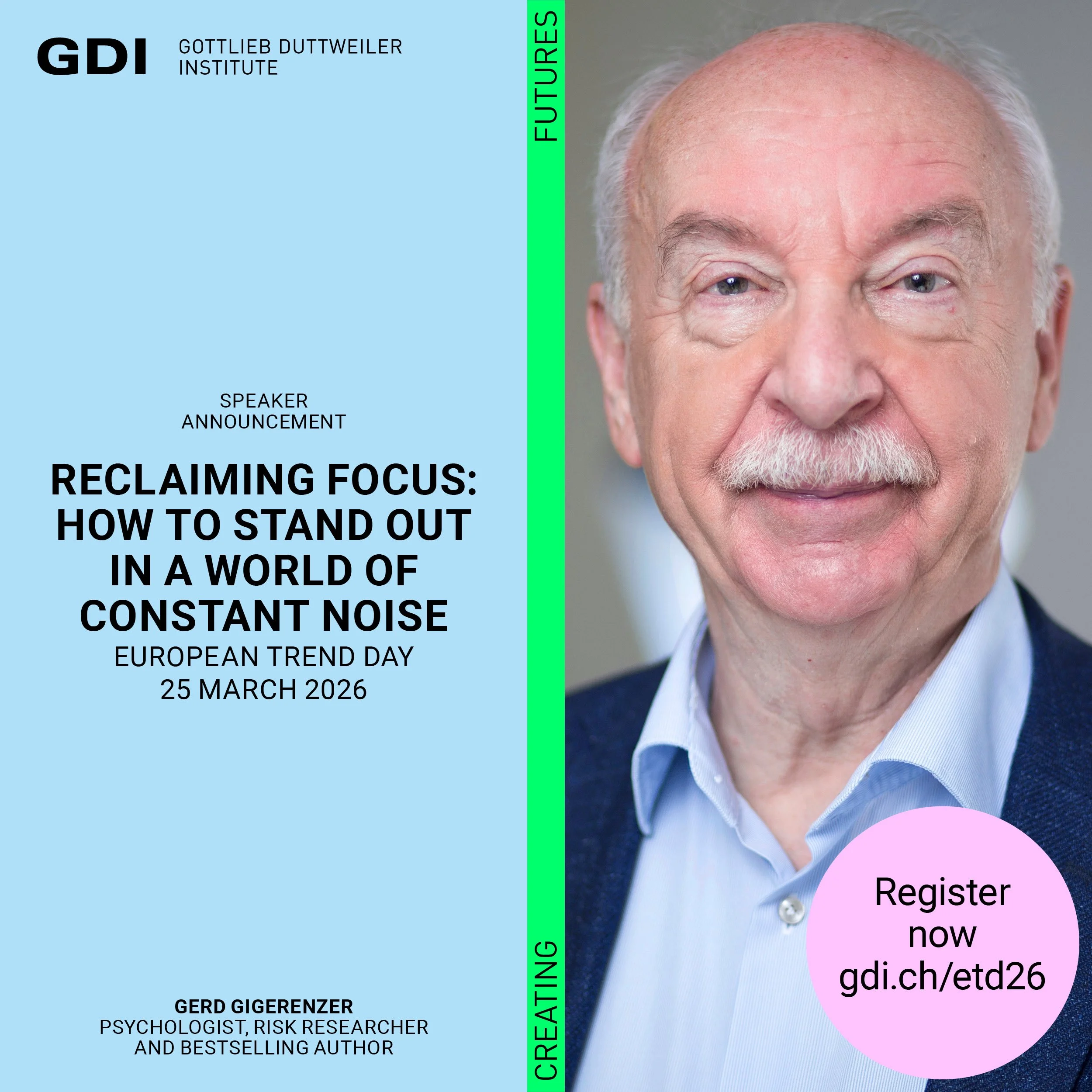
Reclaiming Focus: How to Stand Out in a World of Constant Noise
Intelligent systems are increasingly intruding into our everyday lives. Most of the time they go unnoticed, but they have a huge impact. They determine what we see, influence what we think about and manipulate our decisions. In the midst of the flood of digital services, the countless number of feeds and an ever-increasing volume of AI-generated content, many people lose their focus. Companies themselves fuel the flood of information and at the same time suffer from its impact, as messages get lost in the noise. Furthermore, democratic societies are struggling for control over the channels in which opinions are formed today. Attention becomes a scarce resource and distraction a constant companion. Learn More
GDI Gottlieb Duttweiler Institute
Langhaldenstrasse 21, 8803 Rüschlikon
Switzerland
+41 44 724 61 11
info@gdi.ch
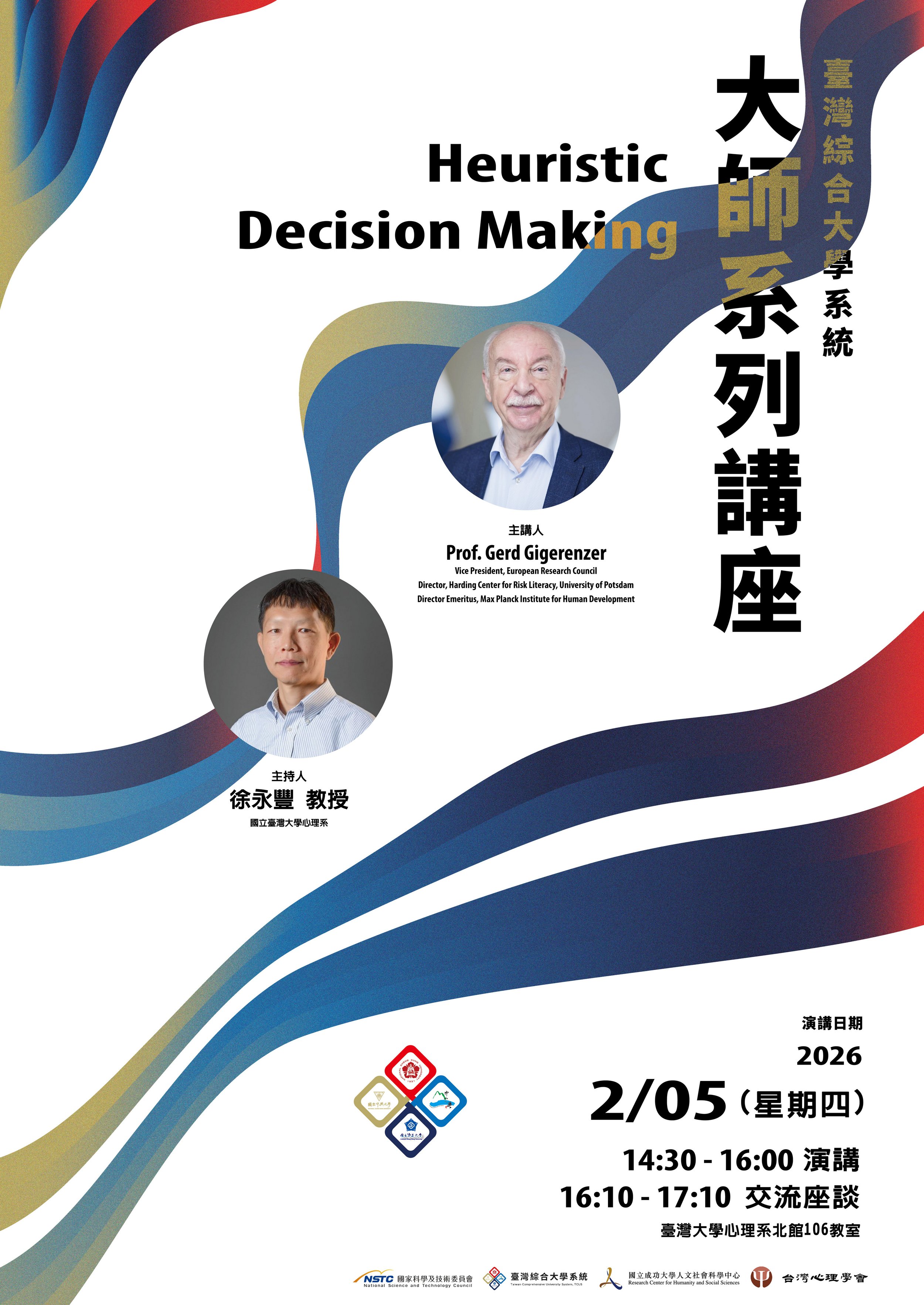
February, 5 2026: 2:30 - 4 pm
at National Taiwan University
Department of Psychology
North building, Room 106
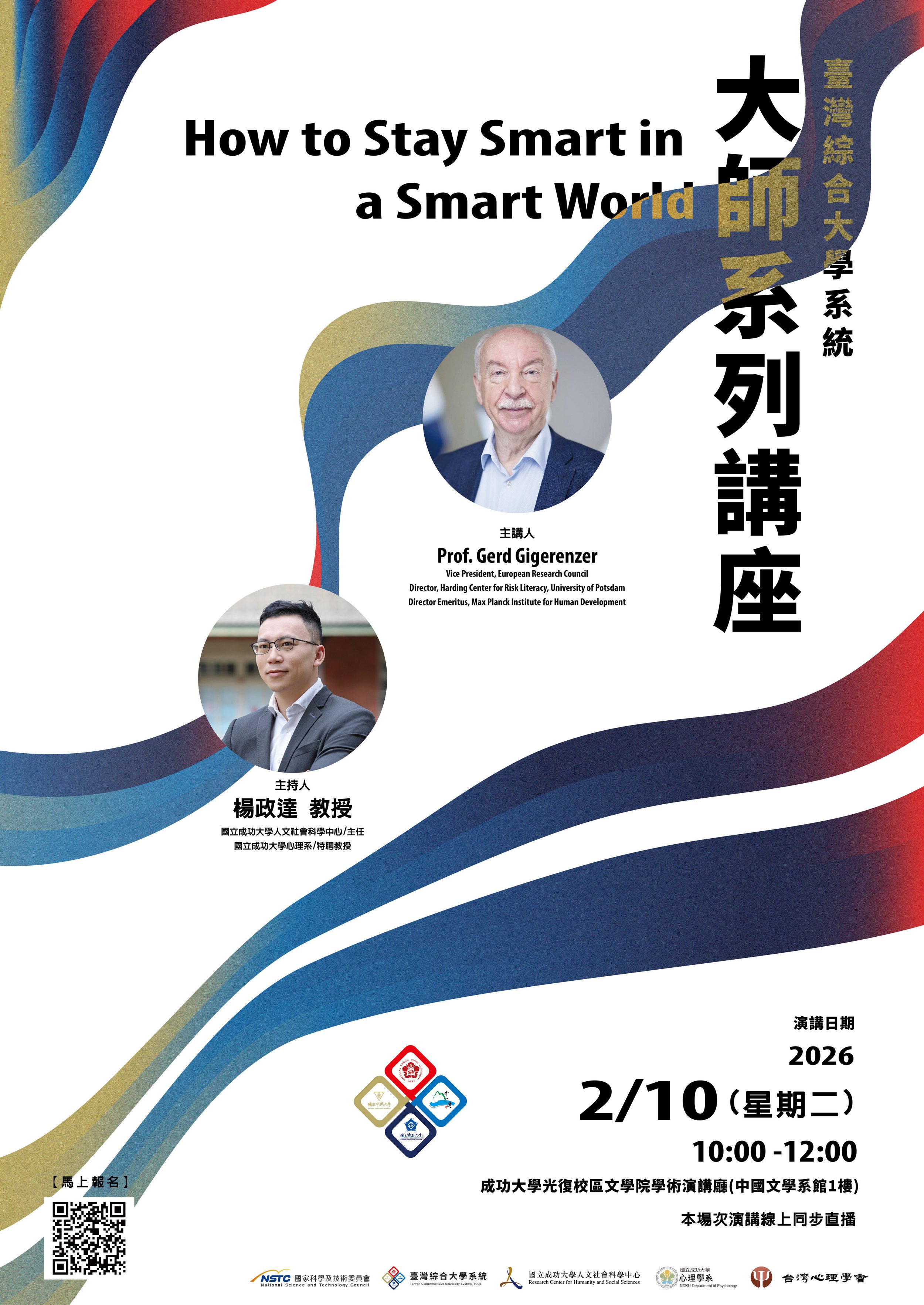
February, 10 2026: 10 am - 12 pm
at National Cheng Kung University
Department of Chinese Literature
Academic Lecture Hall
November, 13 2025 at 1 pm, Paris
Talk and roundtable discussion on “How to stay smart in a smart world”
Is more data always better? When do algorithms outperform human judgment—and when don’t they? How does machine intelligence differ from human intelligence? And are we, perhaps, sleepwalking into surveillance? Exploring these questions is essential if we want to stay in control in an increasingly automated world. To frame possible answers, I introduce the stable-world principle, the adapt-to-AI principle, and the Russian tank fallacy. Now more than ever, we need to equip ourselves with knowledge about how to make better decisions in the digital age.
Curie Campus
BDD amphitheater
11 Rue Pierre et Marie Curie, 75005 Paris
Campus map

November, 24 2025 at 8 pm, Maastricht
Joan Muysken Lecture: Homo Heuristicus: Decision Making in an Uncertain World
Can less be more? In a world characterised by uncertainty, simple rules — known as heuristics — often lead to better decisions than complex algorithms. These heuristics are not only more efficient but also easier to understand and apply. This talk explores the concept of the adaptive toolbox (the repertoire of heuristics available to individuals or organisations) and examines its ecological rationality — how these heuristics leverage the structure of the environment to achieve effective outcomes. Gerd Gigerenzer will demonstrate when less can be more, and why.
Auditorium
Minderbroedersberg 4-6
6211 LK Maastricht, The Netherlands
Google Maps
December, 1 2025 at 3 pm, Rome
Keynote: Bounded Rationality
The talk will be based on the following paper:
Gigerenzer, G. (2024). From bounded rationality to ecological rationality. In Elgar Companion to Herbert Simon (pp. 149-175). Edward Elgar Publishing. PDF
SALA DELLE COLONNE
LUISS CAMPUS AT VIALE POLA 12
ROME
Google Maps
If you would like to book Prof. Gerd Gigerenzer for a keynote, please contact us by e-mail or use the contact form below.