
© Arne Sattler
Welcome to the Official Website of Gerd Gigerenzer
Discover the work of Gerd Gigerenzer, a leading psychologist and internationally acclaimed expert in decision-making, risk literacy, and bounded rationality. With decades of groundbreaking research, Gerd Gigerenzer has reshaped how we understand human intuition, heuristics, and the ways people make decisions under uncertainty.
On this website, you will find an overview of his publications, current projects, and media appearances. Whether you're a researcher, policymaker, educator, or simply curious about the science of decision-making, this platform offers valuable insights into how we can make smarter, more informed choices in an increasingly complex world.
Explore. Learn. Decide.
Welcome to a world where intuition meets intelligence.
NEWS
NEWS
Upcoming Talks
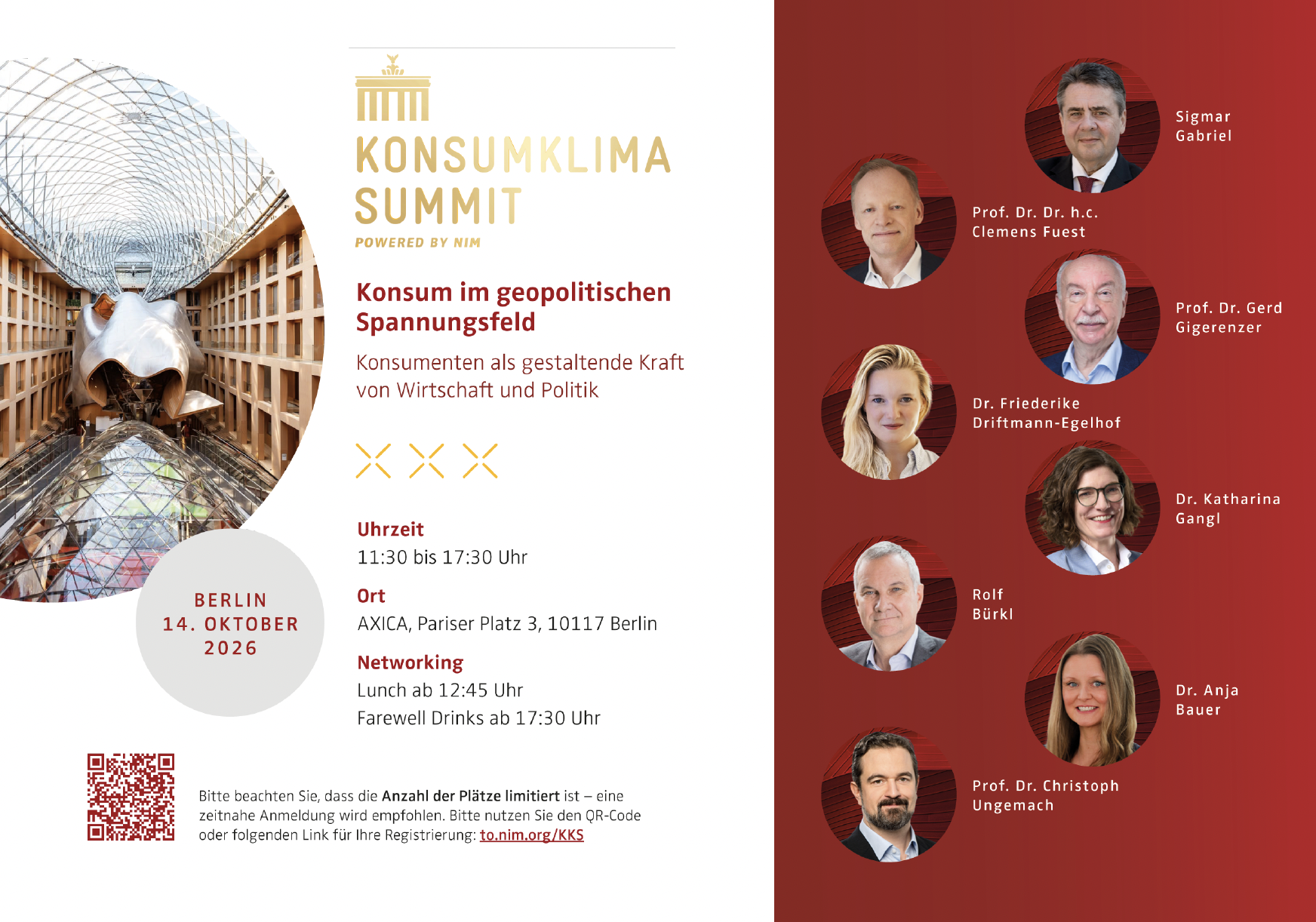
Einladung zum Konsumklima Summit
am 14. Oktober 2026 in Berlin
Wenn sich Konsum verändert, verändert sich Wirtschaft.
Konsum im geopolitischen Spannungsfeld
Freuen Sie sich auf hochkarätige Referentinnen und Referenten, darunter Sigmar Gabriel, Prof. Dr. Clemens Fuest (ifo Institut), Dr. Friederike Driftmann-Egelhof, Dr. Katharina Gangl (NIM) und Prof. Dr. Gerd Gigerenzer (Harding-Zentrum für Risikokompetenz), auf exklusive Einblicke aus der Konsumklima-Studie sowie auf den Austausch mit Entscheidungsträgerinnen und Entscheidungsträgern aus Wirtschaft, Politik und Wissenschaft.
Anmeldung: https://www.nim.org/konsumklima-summit-2026
HINWEIS: Aufgrund der Exklusivität des Formats erfolgt die Zusage nach Prüfung Ihrer Anmeldung.
Datum: 14. Oktober 2026
Ort: Berlin, AXICA, Pariser Platz
Beginn: 11:30 Uhr | Ende: 17:30 Uhr

Interesting News
LOOKING FOR INVESTORS
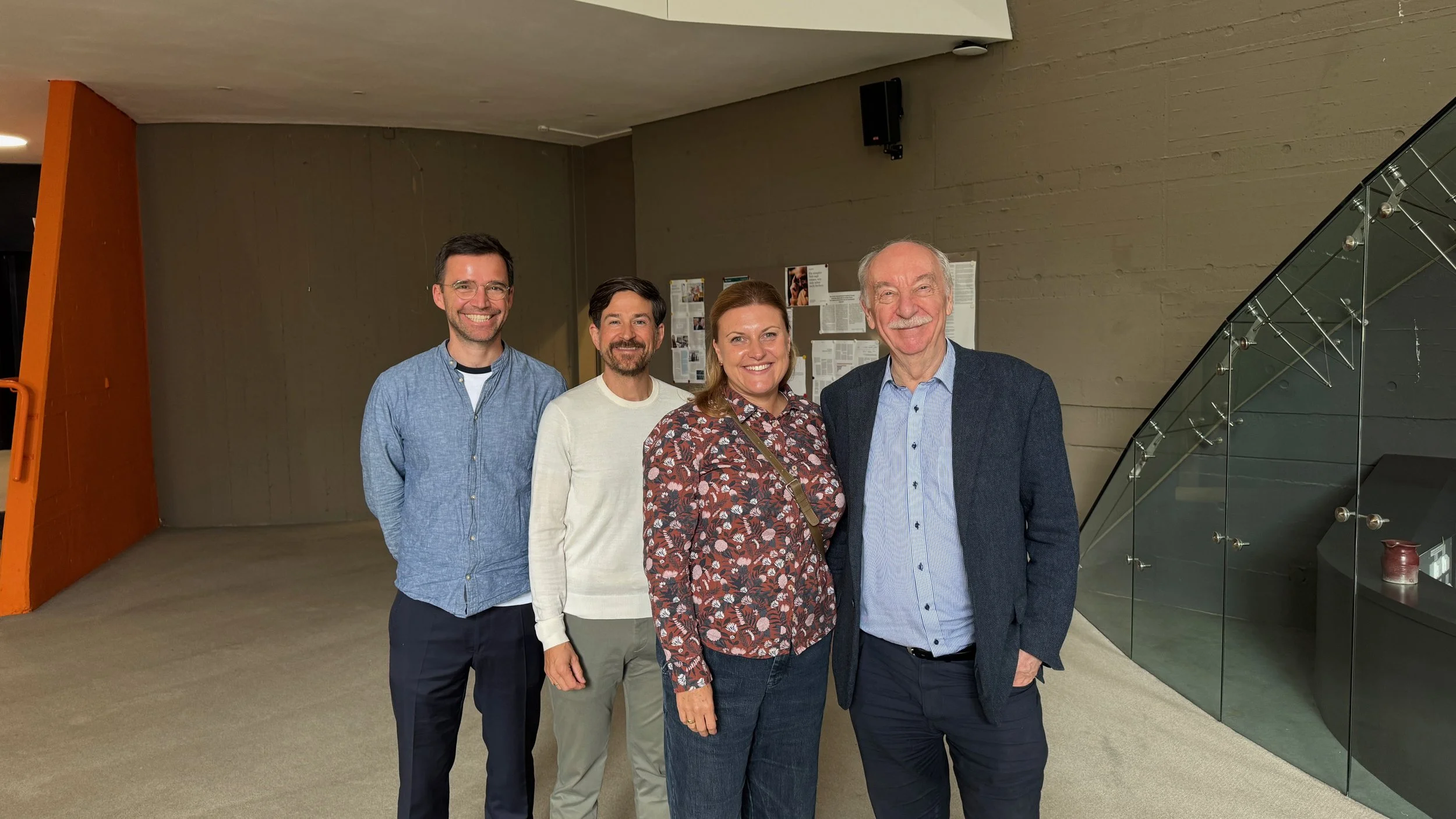
from left to right: Florian Artinger, Philipp Leipold, Susanne Jung and Gerd Gigerenzer

Most people assume that good decisions require more time and more information. My research over the past decades suggests otherwise.
Good decisions can be made quickly. They save time, reduce costs, and enable organizations to act—even when situations become complex.
This conviction is why I founded Simply Rational – The Decision Institute.
Today, we help organizations make decisions that are bolder, safer, and grounded in science. The need for responsible decision-making is growing, especially as uncertainty and AI reshape how organizations operate.
To continue building on this path, Simply Rational GmbH has opened a funding round.
Until October 2026, we are looking for investors who share our vision and want to help shape the company’s next phase of growth.
The funding will support three priorities:
→ advancing our next stage of development and innovation
→ strengthening our science-based solutions
→ scaling our impact within organizations
We would be pleased to hear from people who share our core belief: good decisions are the foundation of resilient, innovative, and successful organizations—organizations that keep people at the center.
If you believe in this mission and would like to help shape what comes next for Simply Rational, let’s talk.
Our Managing Directors, Susanne Jung and Philipp Leipold, will be happy to provide further details.
www.simplyrational.de