Talks Archive
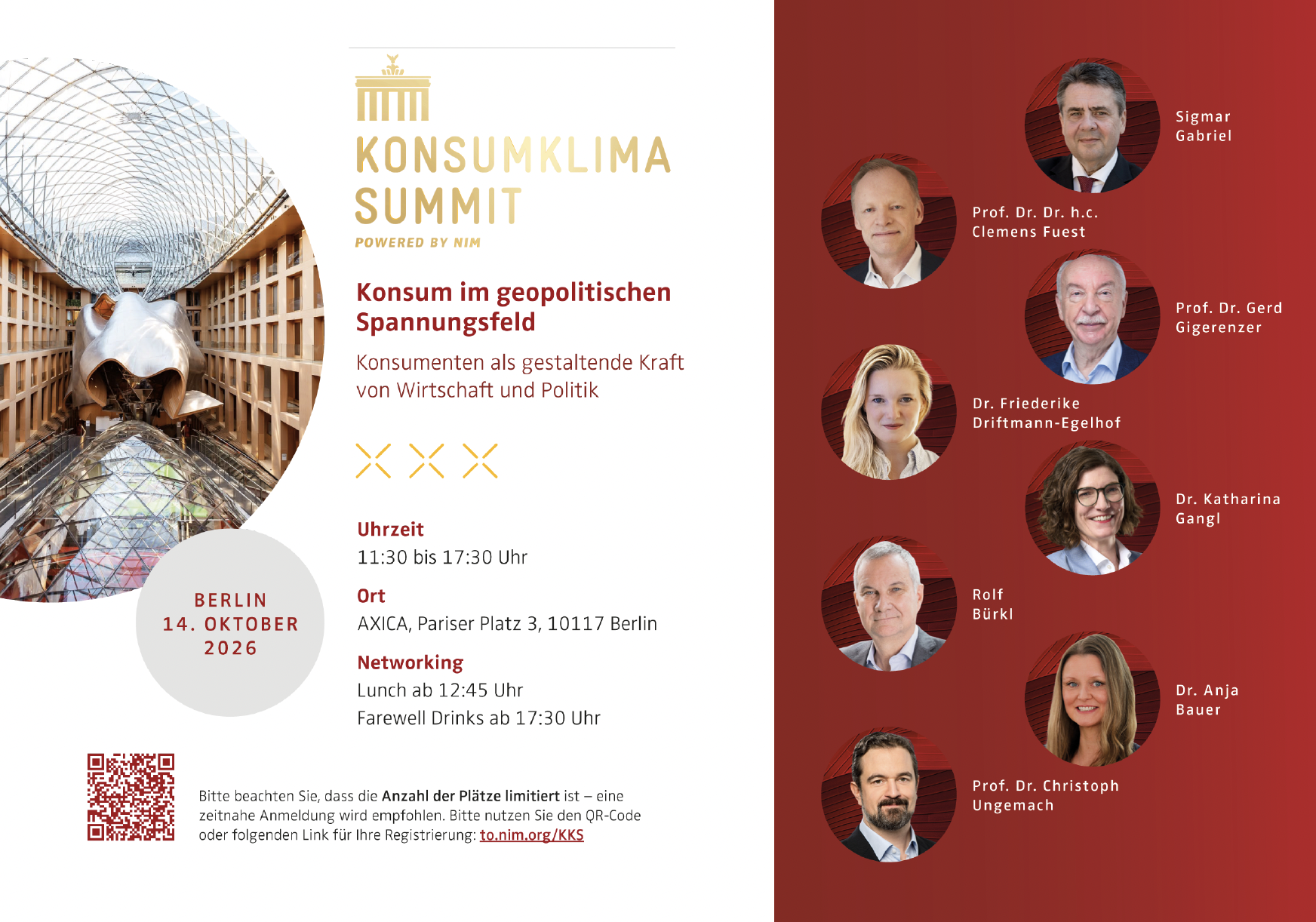
Einladung zum Konsumklima Summit
am 14. Oktober 2026 in Berlin
Wenn sich Konsum verändert, verändert sich Wirtschaft.
Konsum im geopolitischen Spannungsfeld
Freuen Sie sich auf hochkarätige Referentinnen und Referenten, darunter Sigmar Gabriel, Prof. Dr. Clemens Fuest (ifo Institut), Dr. Friederike Driftmann-Egelhof, Dr. Katharina Gangl (NIM) und Prof. Dr. Gerd Gigerenzer (Harding-Zentrum für Risikokompetenz), auf exklusive Einblicke aus der Konsumklima-Studie sowie auf den Austausch mit Entscheidungsträgerinnen und Entscheidungsträgern aus Wirtschaft, Politik und Wissenschaft.
Anmeldung: https://www.nim.org/konsumklima-summit-2026
HINWEIS: Aufgrund der Exklusivität des Formats erfolgt die Zusage nach Prüfung Ihrer Anmeldung.
Datum: 14. Oktober 2026
Ort: Berlin, AXICA, Pariser Platz
Beginn: 11:30 Uhr | Ende: 17:30 Uhr
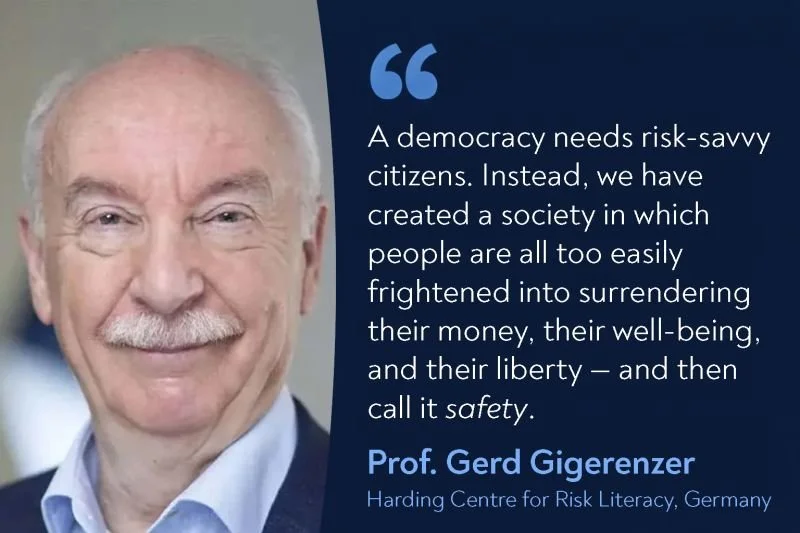
Safety 360° Summit Switzerland
I was at the Safety 360° Summit in Altdorf (Uri) Switzerland on April, 28 2026. Find further information here.
Safety 360°
Risk • Cyber • State • Society
28 April 2026
on "World Day for Safety & Health“
Uristiersaal, Altdorf (UR), Switzerland
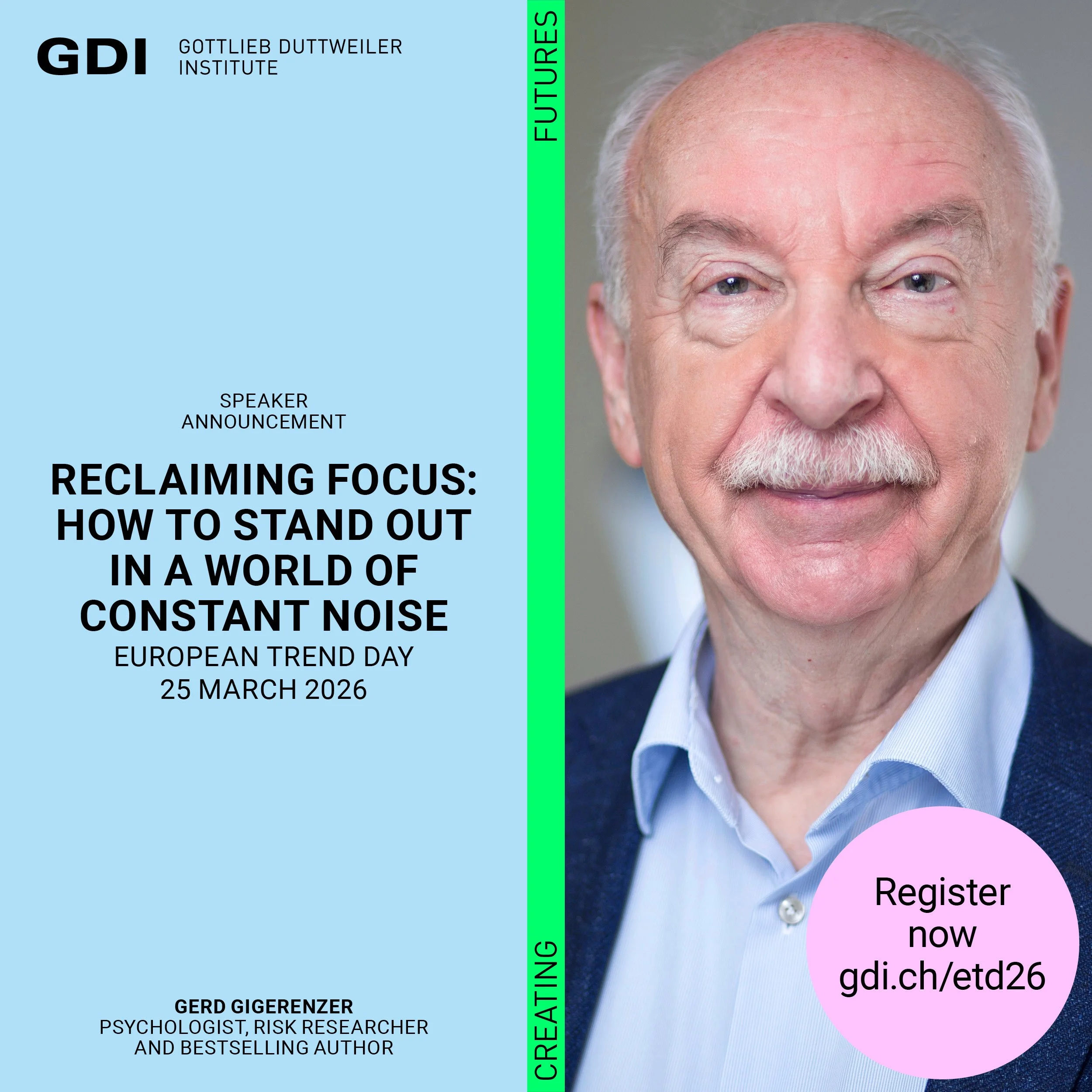
Reclaiming Focus: How to Stand Out in a World of Constant Noise
Intelligent systems are increasingly intruding into our everyday lives. Most of the time they go unnoticed, but they have a huge impact. They determine what we see, influence what we think about and manipulate our decisions. In the midst of the flood of digital services, the countless number of feeds and an ever-increasing volume of AI-generated content, many people lose their focus. Companies themselves fuel the flood of information and at the same time suffer from its impact, as messages get lost in the noise. Furthermore, democratic societies are struggling for control over the channels in which opinions are formed today. Attention becomes a scarce resource and distraction a constant companion. Learn More
GDI Gottlieb Duttweiler Institute
Langhaldenstrasse 21, 8803 Rüschlikon
Switzerland
+41 44 724 61 11
info@gdi.ch
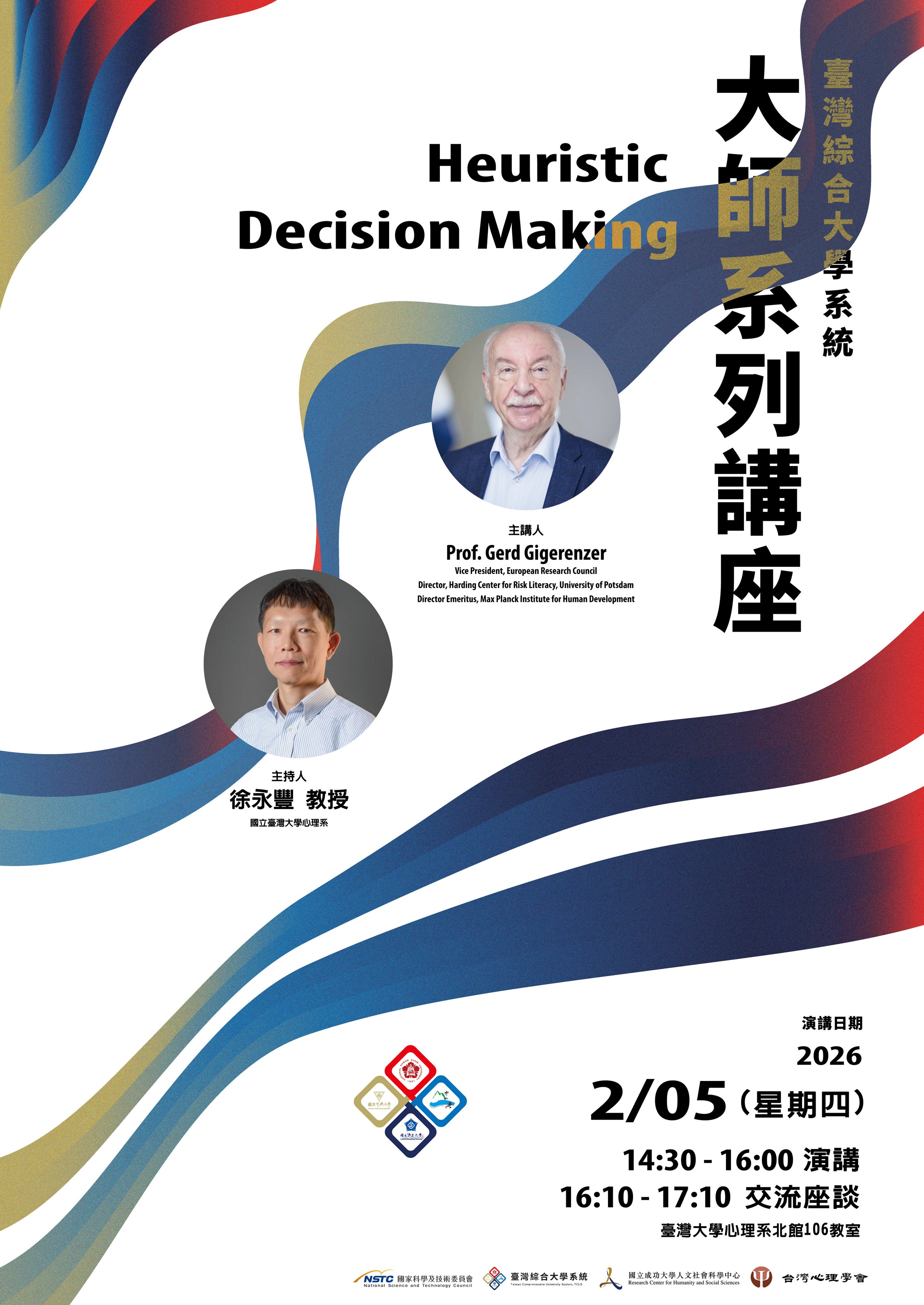
February, 5 2026: 2:30 - 4 pm
at National Taiwan University
Department of Psychology
North building, Room 106
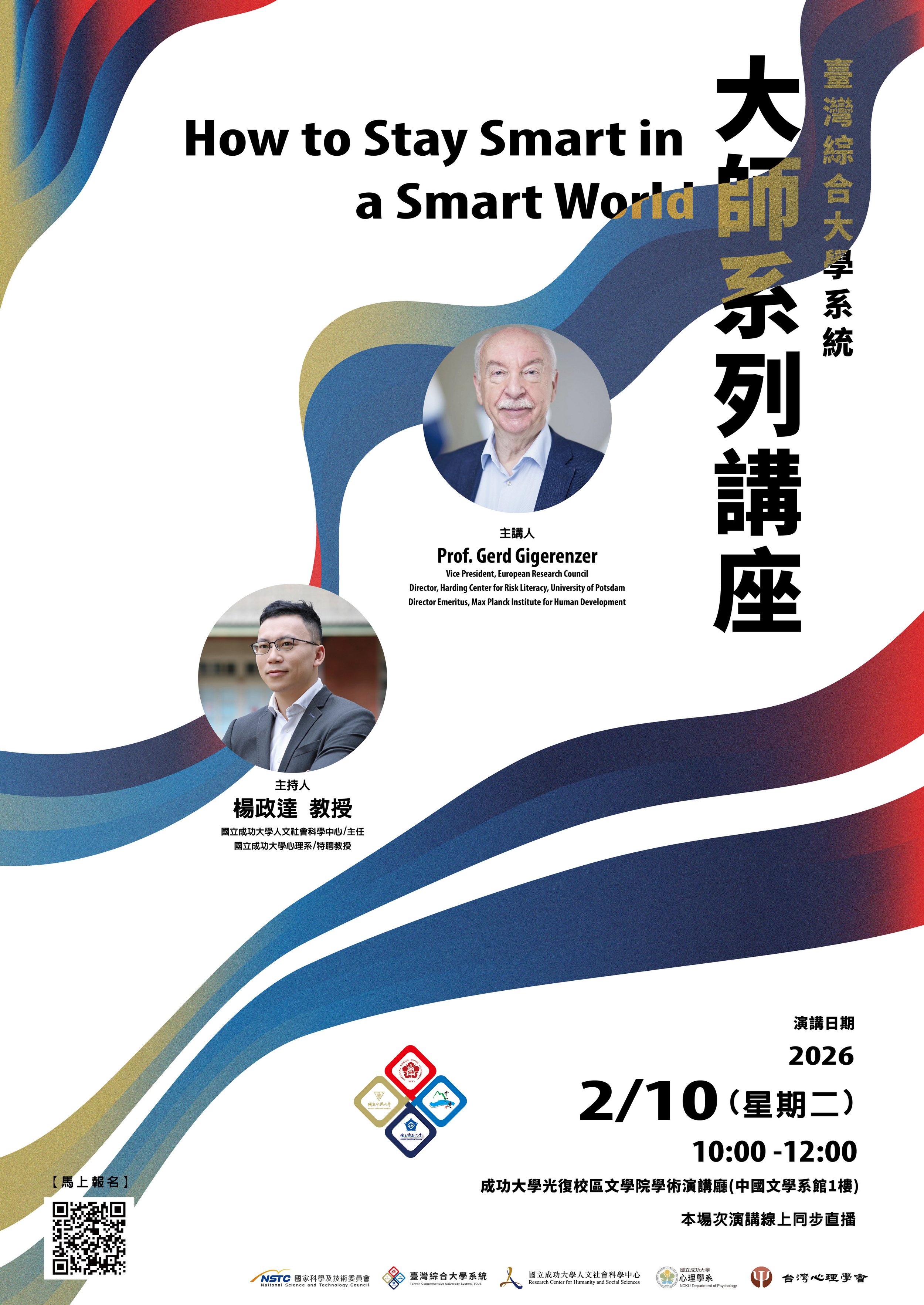
February, 10 2026: 10 am - 12 pm
at National Cheng Kung University
Department of Chinese Literature
Academic Lecture Hall
November, 13 2025 at 1 pm, Paris
Talk and roundtable discussion on “How to stay smart in a smart world”
Is more data always better? When do algorithms outperform human judgment—and when don’t they? How does machine intelligence differ from human intelligence? And are we, perhaps, sleepwalking into surveillance? Exploring these questions is essential if we want to stay in control in an increasingly automated world. To frame possible answers, I introduce the stable-world principle, the adapt-to-AI principle, and the Russian tank fallacy. Now more than ever, we need to equip ourselves with knowledge about how to make better decisions in the digital age.
Curie Campus
BDD amphitheater
11 Rue Pierre et Marie Curie, 75005 Paris
Campus map
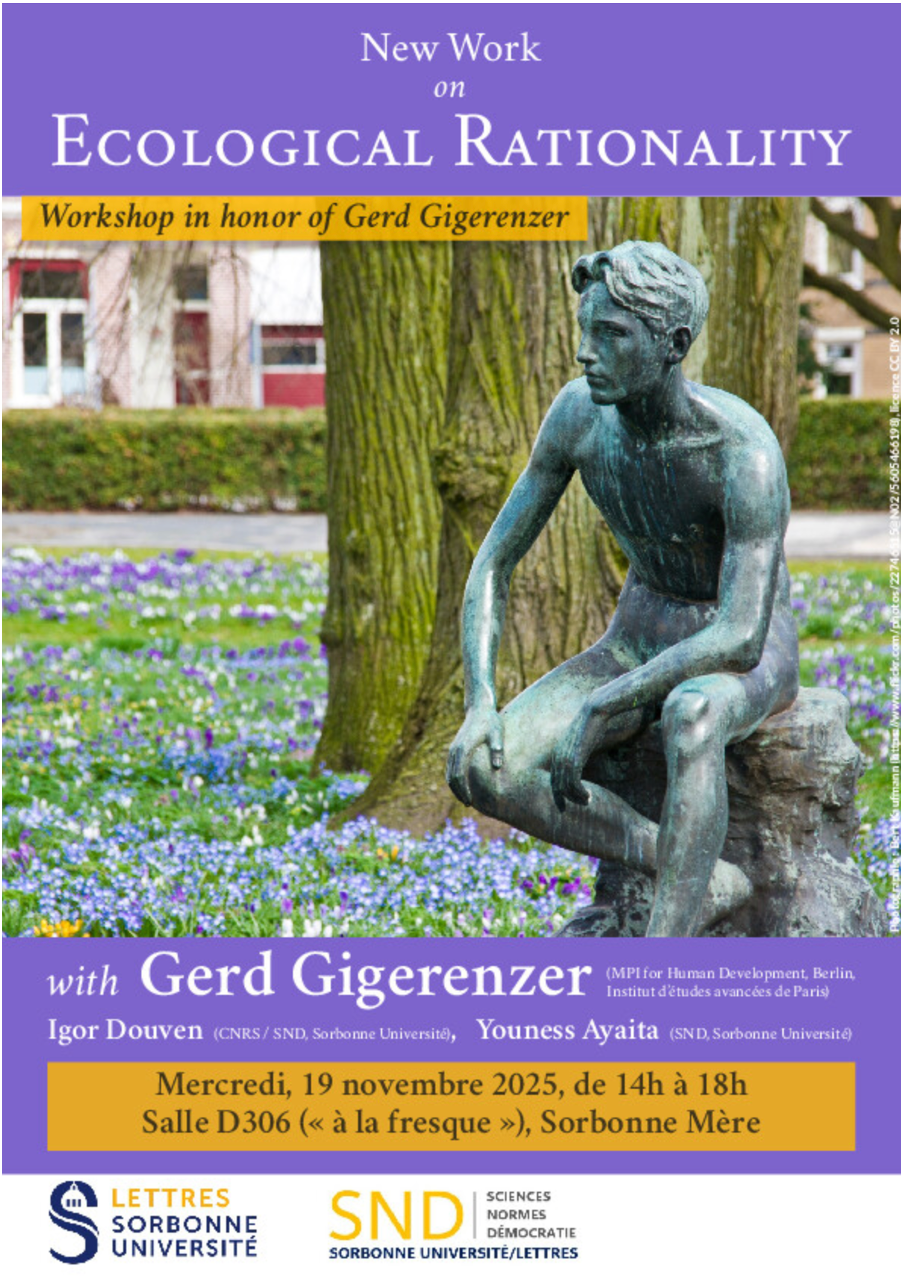
November, 24 2025 at 8 pm, Maastricht
Joan Muysken Lecture: Homo Heuristicus: Decision Making in an Uncertain World
Can less be more? In a world characterised by uncertainty, simple rules — known as heuristics — often lead to better decisions than complex algorithms. These heuristics are not only more efficient but also easier to understand and apply. This talk explores the concept of the adaptive toolbox (the repertoire of heuristics available to individuals or organisations) and examines its ecological rationality — how these heuristics leverage the structure of the environment to achieve effective outcomes. Gerd Gigerenzer will demonstrate when less can be more, and why.
Auditorium
Minderbroedersberg 4-6
6211 LK Maastricht, The Netherlands
Google Maps
December, 1 2025 at 3 pm, Rome
Keynote: Bounded Rationality
The talk will be based on the following paper:
Gigerenzer, G. (2024). From bounded rationality to ecological rationality. In Elgar Companion to Herbert Simon (pp. 149-175). Edward Elgar Publishing. PDF
SALA DELLE COLONNE
LUISS CAMPUS AT VIALE POLA 12
ROME
Google Maps